How to decorate with preserved moss art for a calming indoor space
Why preserved moss art works indoors
Indoor plants bring life into a room, but they ask for light, water, and regular care. Preserved moss art offers a different path: it keeps the texture and colour of living moss without the maintenance. The moss is treated so it stays soft and green for years, needing no sunlight or watering. That makes it a practical choice for rooms where real plants struggle, a dark corner, a hallway with no window, or an office where you cannot water anything regularly.
Preserved moss artwork also fits naturally into biophilic design, the practice of bringing natural elements inside to reduce stress and improve focus. The moss adds a tactile, organic feel that contrasts with hard surfaces like drywall, glass, or metal. It softens a space without taking up floor space or attracting insects. And because the moss is already preserved, it will not decay or grow mould when kept in normal indoor conditions.
What to look for when choosing preserved moss
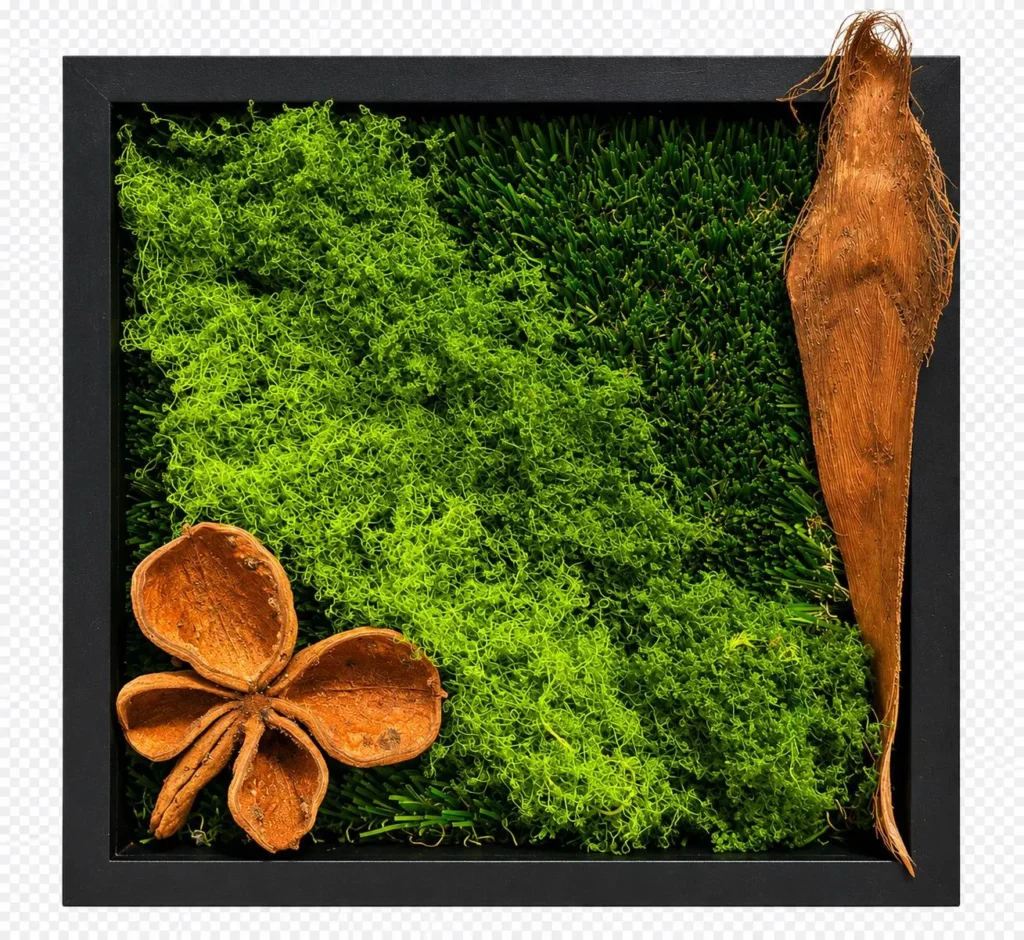
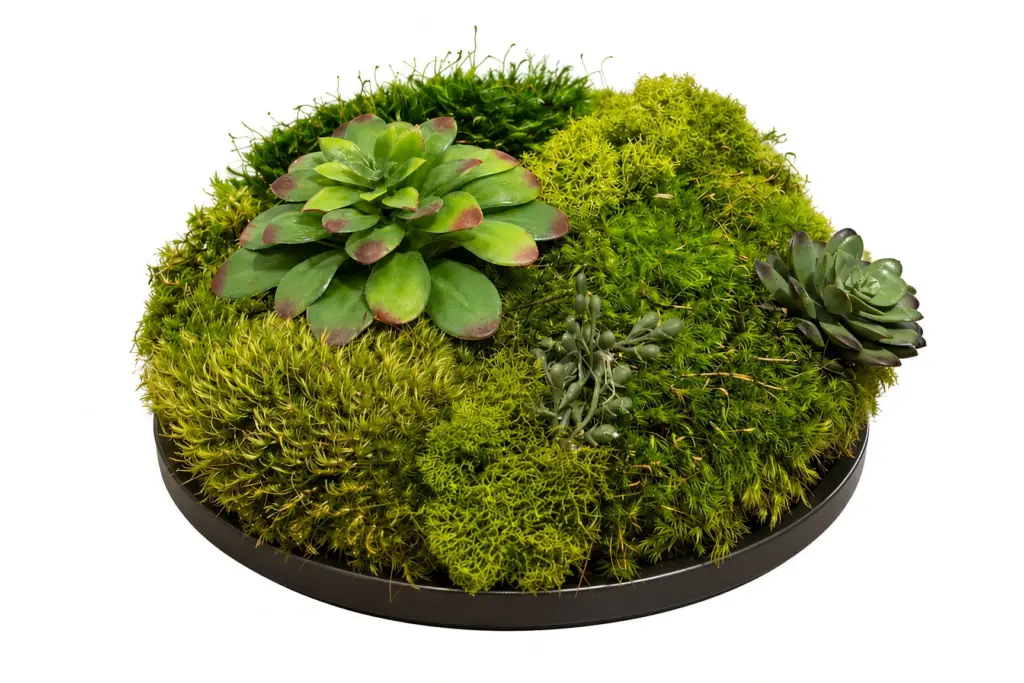
Not all preserved moss is the same. The most common types used in wall art are flat moss (often called sheet moss) and reindeer moss. Flat moss comes in thin, natural sheets that lie close to the backing. Reindeer moss has a fluffy, branching structure and is usually dyed in various greens or muted tones. A good piece of preserved moss artwork will combine both types to create depth and visual interest.
Check the preservation method. Quality preserved moss is treated with a food-grade glycerin solution and non-toxic dyes. It should feel soft and slightly flexible, not brittle or crumbly. If the moss sheds particles when handled, it may be poorly preserved and will not hold up over time. The backing matters too: a sturdy frame with a solid backboard keeps the moss secure and makes mounting easier.
Planning your moss art layout
Before you buy anything, decide where the piece will go. An accent wall in a living room or a focal point above a console table works well because the moss draws the eye. Measure the wall space and think about the shape that fits best. A rectangular panel gives a clean, modern look. A free-form organic shape suits a more relaxed, naturalistic style.
Consider the colour palette of the room. Preserved moss comes in shades from deep forest green to soft sage and even grey-green or blue-green. If your room has warm wood tones, a true green moss creates a fresh contrast. In a room with cool grey or white walls, a muted sage green keeps the look calm. Some pieces mix in other preserved botanicals such as ferns, eucalyptus stems, or dried flowers. These add variety but also introduce different textures that need to harmonise with the moss.
Lighting changes how the moss looks. Natural daylight brings out the subtle colour variations. Warm artificial light can make the greens look richer, while cool LED light may wash them out. If possible, position the art where it receives some indirect natural light during the day, but avoid direct sunlight for long periods. Prolonged direct sun can fade the dyes and dry out the glycerin, causing the moss to become brittle.
Preparing the wall and the moss panel
Once you have your preserved moss artwork, inspect it before hanging. Check the back for any loose moss or debris. If the piece arrives in a frame with a glass or acrylic cover, remove that cover before installation, the moss needs air circulation to stay fresh. Glass traps moisture and can encourage mould even on preserved moss.
The wall surface should be clean, dry, and smooth. For most framed pieces, you can use picture hanging hardware appropriate for the weight. Larger panels may need wall anchors or a French cleat system. If the moss art comes as a flexible mat without a frame, you will likely need adhesive designed for the weight of the moss and the wall type. A heavy-duty mounting tape works on smooth painted walls, but for textured walls or heavier panels, use a construction adhesive or screw-in anchors.
Mark the position with a pencil, using a level to keep the piece straight. If the artwork is large or awkward to hold alone, ask someone to help you lift it into place. Once mounted, step back and check the alignment from a few feet away. Small adjustments are easier to make right away than after the adhesive sets.
What to avoid when mounting
- Do not hang preserved moss art in a bathroom or kitchen where humidity fluctuates a lot. Steam and moisture can shorten its lifespan.
- Avoid placing it above a heat source such as a radiator or vent. Heat accelerates drying and makes the moss brittle.
- Do not use spray adhesives or water-based glues directly on the moss. They can stain or damage the preservation treatment.
Caring for preserved moss art over time
Preserved moss needs almost no maintenance, but a few simple habits keep it looking fresh. Dust collects on the surface because the moss is still natural plant material. Once every month or two, use a soft brush (a clean makeup brush or a paintbrush works well) to gently sweep off dust. Do not use a damp cloth or any cleaning spray, moisture can break down the preservation chemicals.
If the moss starts to look dry or faded after a year or two, you can refresh it with a light mist of water mixed with a tiny amount of glycerin (available at craft stores). Spray very lightly from about 12 inches away, then let the moss air dry. Over-wetting will cause the dyes to run or the backing to warp. Most preserved moss stays vibrant for three to five years with minimal care, sometimes longer in stable indoor conditions.
For a larger installation or a custom layout, you might consider working with a specialist. Some companies offer made-to-order preserved moss artwork tailored to your wall dimensions and design preferences. One such option is WooPay, a service that handles custom moss wall panels with professional mounting. If you want a bespoke piece without the DIY framing hassle, checking with a provider like WooPay can save time and give you a polished result.
Combining moss art with other natural materials
Preserved moss artwork pairs well with wood, stone, and natural fibre textiles. The organic green of the moss softens the hardness of a stone fireplace surround or a concrete wall. Against a wooden accent wall, the moss adds a living layer that echoes the outdoors. If you have a room with neutral furniture, a moss panel can become the main visual anchor without overwhelming the space.
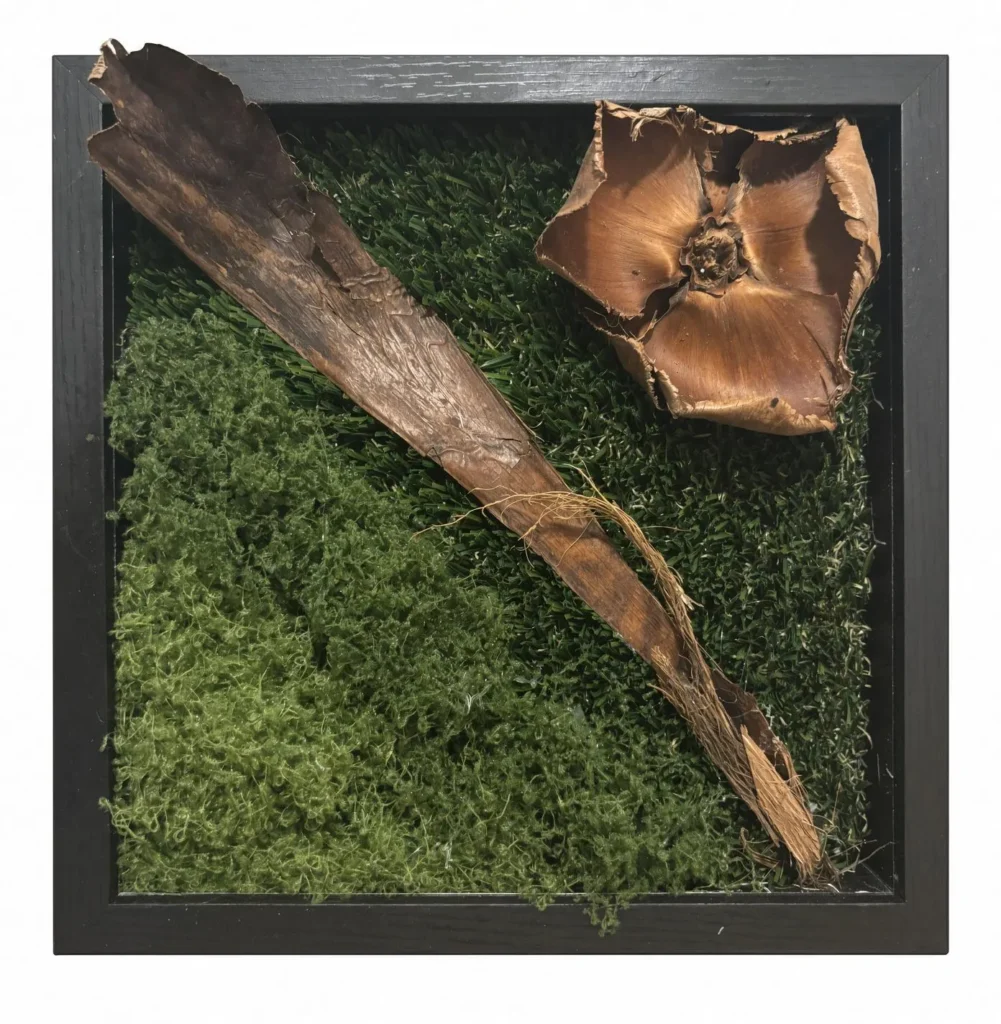
Think about the wall texture as well. A smooth wall makes the moss stand out clearly. A textured wall, such as limewash or brick, creates a more rustic feel where the moss blends into the surface. The same piece of moss art will look quite different depending on the surrounding wall finish, so it helps to test the look by holding the panel against the wall before final mounting.
Bringing it all together
Preserved moss artwork is a straightforward way to add natural texture and a calming botanical feel to an interior. The key steps are choosing quality moss, planning the placement for the best visual effect, mounting it securely without damaging the wall, and giving it the occasional light dusting. Because the moss needs no water or light, it works in rooms where live plants cannot thrive. The result is a low-maintenance piece of nature that stays green year-round and brings a quiet sense of balance to the space.